English
In this blog, we are looking at the science behind corrosion resistance and how testing ensures material integrity.
Corrosion can be one of the top causes of piping system failure across industries. From offshore platforms and chemical plants to renewable energy facilities and manufacturing hubs. When left unchecked, corrosion can compromise safety, increase maintenance costs and shorten asset life. However, corrosion doesn’t occur randomly: it’s a predictable electrochemical process influenced by material choice, environment and operating conditions.
Understanding why some materials resist corrosion while others degrade rapidly is essential for engineers, project teams and procurement specialists. Beyond material science, rigorous testing — both destructive and non-destructive — validates performance and supports long-term reliability.
At Special Piping Materials (SPM), we combine corrosion-resistant alloys with industry-standard testing practices to ensure quality, safety and project success.
What Is Corrosion?
Corrosion is fundamentally an electrochemical reaction in which a material gradually deteriorates through interaction with its environment. In industrial systems, corrosive agents are often unavoidable and include:
- – Chlorides, particularly in seawater and coastal conditions
- – Acids and organic compounds, such as those in petrochemical or biofuel environments
- – Hydrogen sulphide (H₂S) and carbon dioxide (CO₂) in oil and gas service
- – Extreme pH conditions
- – High temperature and high-pressure environments
These factors influence how corrosion progresses. Some environments cause uniform corrosion, where material loss is even across surfaces. Others promote pitting, crevice corrosion or stress-corrosion cracking, which can be far more aggressive and insidious.
How Alloying Elements Create Resistance
Material science lies at the heart of corrosion resistance. Certain elements enhance a material’s ability to withstand corrosive attack:
- – Chromium, found in stainless steels, creates a protective passive layer on the metal surface. This micro-thin oxide film resists further oxidation and pitting.
- – Nickel improves toughness and resistance to stress-corrosion cracking, particularly in sour environments.
- – Molybdenum significantly enhances resistance to pitting and crevice corrosion, making duplex stainless steels and high-performance CRAs suited to aggressive chloride environments.
In contrast, carbon steel lacks these protective elements. While cost-effective initially, it is often unsuitable for harsh environments due to rapid corrosion and reduced service life.
At SPM, selecting the right corrosion-resistant alloy is more than choosing a grade: it’s about matching the metallurgy to the environment, mechanical demands and regulatory requirements of each project.
Common Corrosion Mechanisms
Engineers must consider several corrosion mechanisms when choosing materials:
- – Pitting: Localised holes or “pits” form, often in chloride environments like seawater.
- – Crevice Corrosion: Occurs in shielded areas where stagnant fluids accumulate.
- – Stress-Corrosion Cracking (SCC): A combination of tensile stress and corrosive environment leads to cracking.
- – Uniform Corrosion: Material is evenly corroded across surfaces.
Each mechanism requires a specific material strategy. For example, offshore saltwater applications may benefit from duplex stainless steels with high chromium and molybdenum, while sour gas environments might require nickel alloys with superior crack resistance.
Destructive and Non-Destructive Testing: Validating Material Performance
Selecting corrosion-resistant materials is only the first step. Ensuring those materials will perform as expected, without hidden defects, requires robust testing. At SPM, we support both destructive testing and non-destructive testing (NDT) to verify material quality and integrity.
Non-Destructive Testing (NDT)
NDT techniques evaluate materials without altering or damaging them. These methods are essential for confirming soundness before installation and during service life. Common NDT methods include:
- – Visual Inspection: Checks surfaces for visible defects such as cracks, corrosion or irregularities.
- – Ultrasonic Testing (UT): Uses sound waves to detect internal flaws like inclusions or voids.
- – Radiographic Testing (RT): X-ray or gamma rays reveal internal discontinuities.
- – Magnetic Particle Testing (MT): Detects surface and near-surface imperfections in ferrous materials.
- – Dye Penetrant Testing (PT): Highlights surface cracks and porosity.
NDT helps identify issues such as cracks, inclusions and weld defects without compromising the usefulness of the material. It’s widely used in oil and gas, power generation, petrochemical and offshore sectors where reliability is paramount.
At SPM, we coordinate NDT as part of pre-shipment inspection and, where required by project specifications, as part of factory acceptance testing. These reports provide clients with confidence in material integrity and compliance.
Destructive Testing
Destructive testing involves subjecting material samples to stress until failure. While it destroys the test specimen, it provides invaluable data on strength, ductility and microstructure. Common destructive tests include:
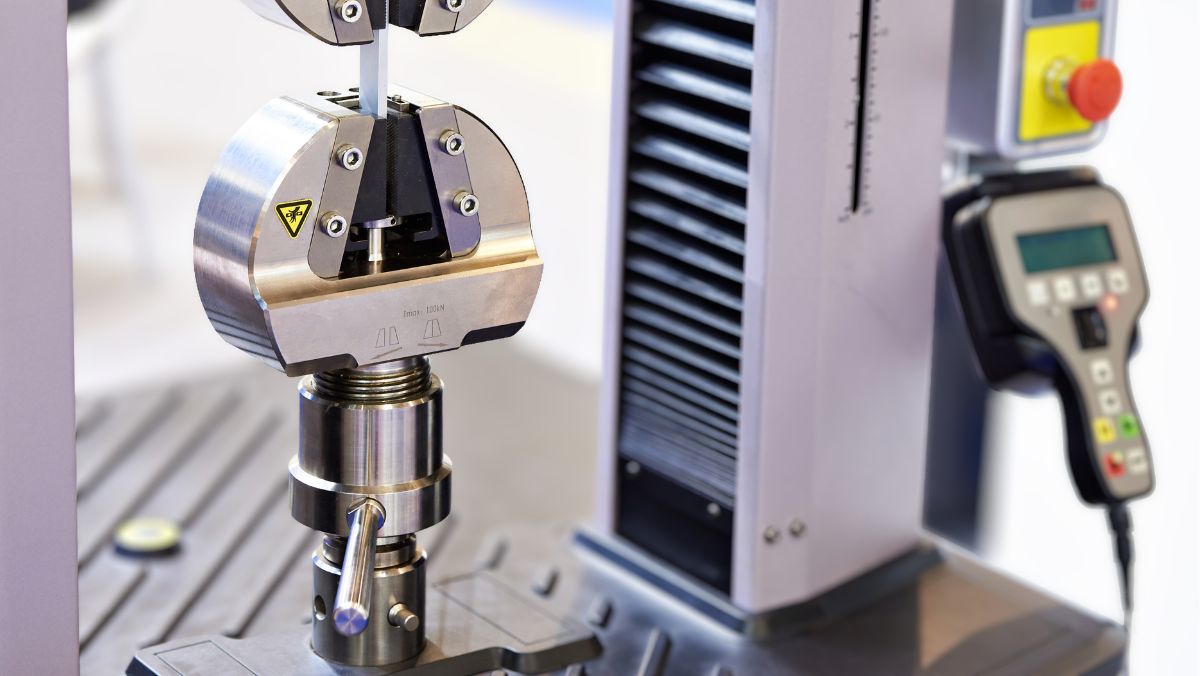
- – Tensile Testing: Measures ultimate strength, yield strength and elongation.
- – Hardness Testing: Assesses resistance to permanent deformation.
- – Impact Testing: Evaluates toughness, especially at varying temperatures.
- – Macro and Micro Examination: Metallographic analysis reveals grain structure and inclusions.
Destructive testing confirms that materials conform to mechanical and chemical property standards. It’s often required for high-pressure systems, hydrogen service, and critical infrastructure where material failure could have severe consequences.
SPM works with accredited laboratories and, where specified, performs destructive testing to align with codes such as ASTM or EN standards. Complete test reports accompany deliveries, ensuring traceability and project compliance.
Real-World Applications
High corrosion resistance, combined with rigorous testing, delivers long service life and lower lifecycle costs across a range of sectors:
- – Offshore Wind Farms: Duplex stainless steels resist saltwater pitting while NDT confirms weld integrity before installation.
- – Chemical Process Plants: High-nickel alloys combat acidic environments, with destructive testing proving mechanical strength.
- – Geothermal Projects: Materials face high temperatures and corrosive brines; testing ensures long-term reliability.
- – Hydrogen Infrastructure: Testing combined with corrosion-resistant materials mitigates embrittlement and validates safety.
Across these applications, SPM supports material selection, testing coordination and documentation to help clients manage risk and deliver projects on schedule.
Corrosion resistance is about far more than choosing “stainless steel.” It’s a strategic engineering decision that combines material science, environmental understanding and rigorous testing. By assessing corrosion mechanisms and applying the right alloys, validated through both destructive and non-destructive testing, operators can significantly enhance safety, performance and asset life.
At Special Piping Materials, our expertise in corrosion-resistant alloys, comprehensive testing support and global supply capability makes us a trusted partner in demanding industrial applications. Whether you need corrosion risk assessment, detailed test documentation, or tailored material recommendations, our team is ready to help.