Special Piping Materials has been known as a trustworthy supplier of duplex and super duplex pipes, fittings and flanges for more than 30 years. Both duplex and super duplex have incredible properties that mean they can be used for many complex and high-pressure situations. But when it comes to choosing the right stainless steel for corrosion resistance, how do you know which is best for your project?
In industrial projects, material selection can make or break a system. Nowhere is this more apparent than in piping networks exposed to aggressive environments. From offshore oil platforms to chemical plants, the wrong stainless steel can result in corrosion, leaks, and unplanned shutdowns.
For engineers and project teams, understanding the differences between Duplex and Super Duplex stainless steels is crucial to ensure long-term performance, safety, and cost efficiency.
Duplex and Super Duplex are high-performance stainless steels known for their unique microstructure, combining the best properties of austenitic and ferritic steels. While they share many characteristics, their chemical composition, mechanical properties, and suitable applications differ. This blog explores these two alloys, helping you choose the right material for your next project.
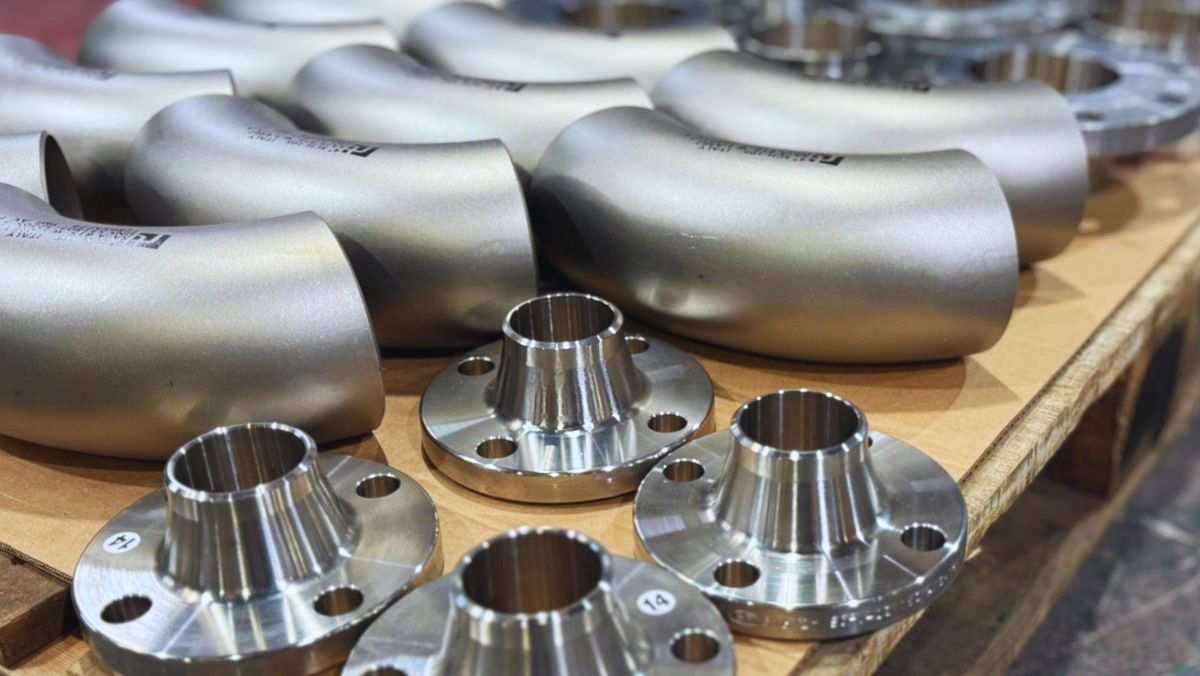
Duplex Stainless Steel: Balanced Performance
Duplex stainless steel features a balanced microstructure, approximately 50% austenitic and 50% ferritic, giving it an excellent combination of strength and corrosion resistance. Its key advantages include:
- – High strength: up to twice that of conventional austenitic stainless steel, allowing thinner-walled piping and reduced weight.
- – Good corrosion resistance: particularly against pitting and crevice corrosion in chloride-containing environments.
- – Cost-effective solution: delivers high performance without the premium of super duplex grades.
Typical applications include seawater cooling systems, chemical processing, desalination plants, and general offshore installations. Duplex is often chosen when moderate corrosion resistance and high strength are required at a competitive cost.
Super Duplex Stainless Steel: High-End Protection
Super Duplex stainless steel takes the properties of duplex further. With higher levels of chromium, molybdenum, and nitrogen, it provides superior resistance to pitting, crevice corrosion, and stress corrosion cracking. Super Duplex also maintains strength at elevated temperatures, making it ideal for demanding offshore and chemical environments.
Applications include:
- – Offshore oil and gas platforms are exposed to high-chloride seawater
- – Chemical plants handling aggressive acids or chlorides
- – High-pressure pipelines and process systems requiring long service life
While Super Duplex offers exceptional performance, it comes at a higher cost than standard Duplex, making it best suited for projects where extreme corrosion resistance and long-term reliability justify the investment.
Choosing the Right Alloy
Selecting between Duplex and Super Duplex depends on several factors:
- – Environmental conditions: chloride concentration, temperature, pH
- – Pressure and mechanical requirements: thickness, strength, fatigue resistance
- – Lifecycle and maintenance considerations: how long the piping should last without replacement
- – Budget constraints: balancing cost against performance requirements
Key Differences Between Duplex and Super Duplex Stainless Steel
- – Chromium content:
- Duplex: 22%–23%
- Super Duplex: 24%–26%
- – Molybdenum content:
- Duplex: 2.5%–3%
- Super Duplex: 3–5%
- – Pitting resistance:
- Duplex: Moderate
- Super Duplex: Very high
- – Maximum working temperature:
- Duplex: ~300°C
- Super Duplex: ~350°C
- – Typical applications:
- Duplex: Seawater systems, chemical processing, general offshore use
- Super Duplex: Offshore platforms, high-chloride environments, high-pressure chemical systems
Special Piping Materials’ Expertise
At Special Piping Materials (SPM), we supply both Duplex and Super Duplex stainless steels to meet exacting project specifications worldwide. With more than 30 years’ experience, SPM provides certified, high-performance piping materials with full traceability, technical documentation, and global logistics support. Our team works closely with engineers and project managers to recommend the right alloy for every application, ensuring long-term reliability and safety.
When it comes to choosing the right stainless steel for corrosion resistance, you can count on the special piping materials team to be able to help.
Understanding the differences between Duplex and Super Duplex stainless steels is vital for any project operating in corrosive environments. While Duplex offers a balanced, cost-effective solution for moderate conditions, Super Duplex provides the ultimate protection in extreme or high-pressure applications. Choosing the right material prevents costly failures, reduces maintenance, and ensures safe, long-lasting operation.
Whether your project requires Duplex or Super Duplex, Special Piping Materials can guide your material selection, provide certified products, and support delivery anywhere in the world.